
Accessibility Tools

Sélectionnez votre langue

Porter les enjeux de la privatisation de l’éducation au Maroc devant l’ONU

Porter les enjeux de la privatisation de l’éducation au Maroc devant l’ONU

Porter les enjeux de la privatisation de l’éducation au Maroc devant l’ONU


This blog is also availble in English here

Este artículo también está disponible en español

Ce post de blog a été posté initialement sur le blog du Right to Education Project. Vous pouvez le l'article original ici.  Pour plus d'informations sur notre plaidoyer sur le droit à l'éducation, vous pouvez consulter la page dédiée.


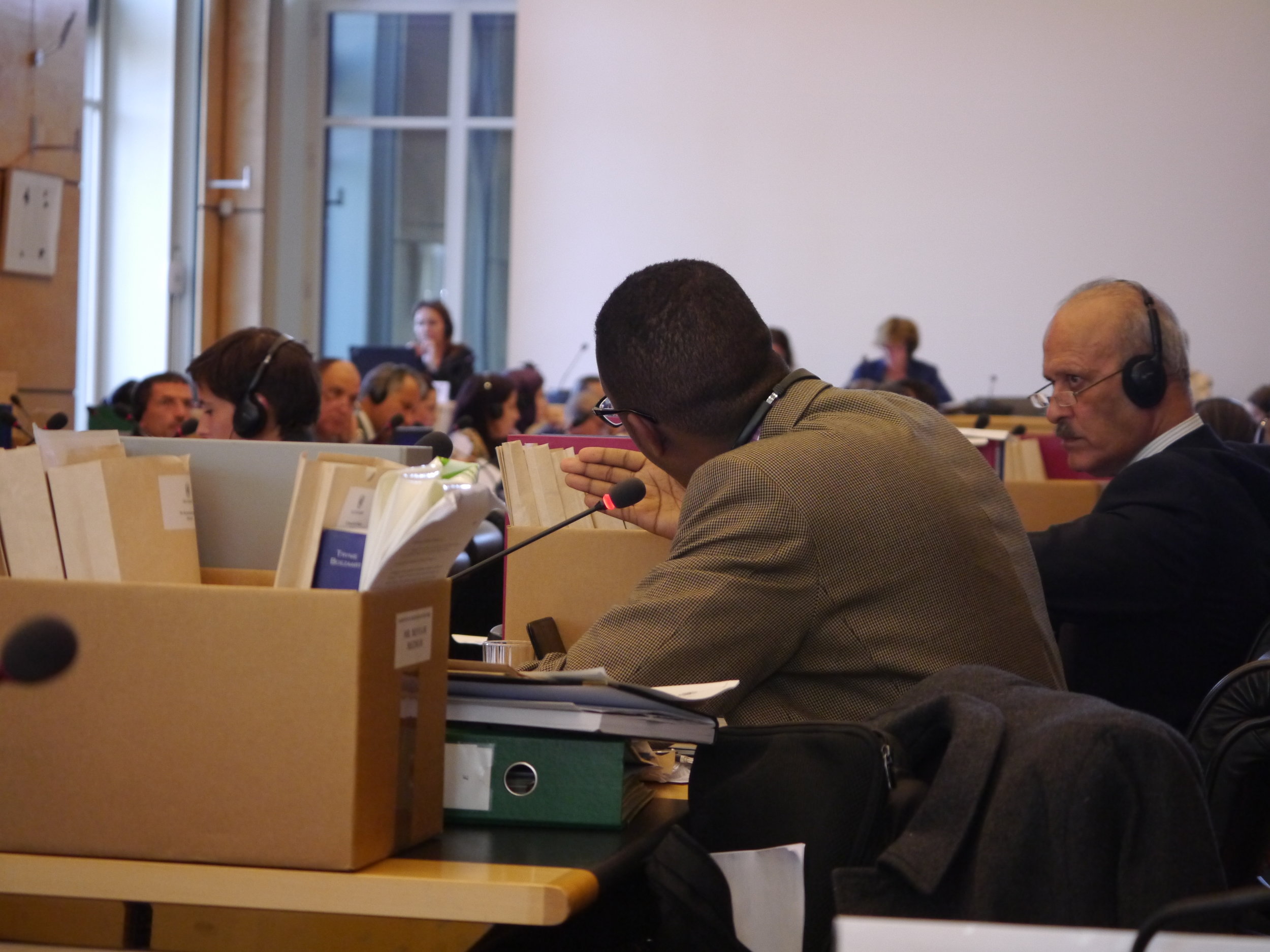
Mercredi 3 septembre,  au matin. Les dés sont jetés ; dans quelques minutes, nous saurons. Ma collègue marocaine, qui représente la Coalition marocaine pour l'éducation pour tous, et moi-même, représentant la Global Initiative for Economic, Social and Cultural Rights(GI-ESCR) attendons avec impatience. Vont-ils poser la question? Que répondra le gouvernement? Le moment est venu. Mme Amal Aldoseri, un membre du Comité des Nations Unies sur les droits de l'enfant (CDE), lance une salve de questions sur le système éducatif au Maroc, et conclut : « Pouvez-vous expliquer l'impact du développement de l'enseignement privé sur les inégalités et le droit à l'éducation dans votre pays ? »

Nous ne pouvons nous empêcher de ressentir un pincement au cœur. Nous approchons du but, après un an de travail acharné pour essayer d’attirer l’attention sur la privatisation rampante de l’éducation au Maroc et ses effets dévastateurs. Le gouvernement marocain va enfin devoir expliquer pourquoi, depuis plus d'une décennie, il a soutenu et encouragé le développement d’un enseignement privé payant, à but lucratif, triplant ainsi le nombre d’enfants inscrits dans des écoles privées, et participant à creuser encore les inégalités dans l'accès à une éducation de qualité et à diviser davantage la société entre riches et pauvres.

Le gouvernement marocain est représenté à Genève par une délégation d’une vingtaine de membres, conduite par la ministre de de la Solidarité de la femme, de la famille et du développement social, Mme Bassima Hakkaoui. La délégation est venue au siège du Haut-commissariat aux droits de l’Homme de l’ONU pour discuter de la mise en œuvre par le gouvernement marocain de la Convention des Nations Unies relative aux droits de l'enfant, dans le cadre de l'examen périodique que le CDE mène normalement tous les cinq ans. Le représentant du gouvernement en charge de l'éducation commence à répondre aux questions de Mme Aldoseri. Il donne une réponse à toutes les questions qu'elle a soulevées, faisant l'éloge des « grand progrès » réalisés par le Maroc en matière d'éducation, et la ministre, Mme Hakkaoui, renchérit.... sauf qu’ils ignorent soigneusement tant l’un que l’autre la question sur la privatisation de l'éducation.

A ce moment-là, nous pensons que c'est fini : le Comité a très peu de temps pour procéder à l'examen du Maroc, la privatisation était le dernier point d’un ensemble de questions sur l’éducation, et une problématique qui peut sembler au Comité relativement anodine au regard de tous les problèmes du Maroc. Les membres du Comité vont maintenant passer à la question suivante, comme prévu. Le gouvernement n’a pas donné les informations escomptées, il ne s’est pas expliqué, et nous n’avons plus qu’à croiser les doigts pour que le Comité tienne compte des enjeux liés à la privatisation de l'éducation dans ses recommandations écrites.

C’est alors que nous voyons quelqu'un lever la main. M. Hatem Kotrane, membre tunisien du CDE, pose une question de suivi sur la privatisation. En se fondant sur es statistiques du ministère de l'Éducation que ma collègue marocaine lui a données pendant la pause un peu plus tôt, il insiste et demande au gouvernement d’expliquer pourquoi les chiffres montrent que la plupart des enseignants du privé sont également employés à plein temps dans le public. Moment de silence dans la salle. Une autre main se lève. M. Benyam Mezmur, un autre membre du Comité, pose une autre question complémentaire, et demande pourquoi le gouvernement n'a pas répondu à la question sur la privatisation de l'éducation, qui est selon lui un point clé.

La délégation du gouvernement semble perturbée. Quelqu'un commence à répondre, et indique que le Maroc vise à atteindre le plus rapidement possible « 20% des élèves inscrits dans les écoles privées ». Mme Hakkaoui, la ministre, suit et fait l'éloge de l'enseignement privé. Elle indique que le gouvernement « favorise la libre concurrence dans l'enseignement, ce qui est bon pour tous les citoyens ». Tous deux insistent sur le fait que l'enseignement privé est « bien réglementé au Maroc » et qu’« aucun enseignant du secteur public enseigne dans les écoles privées ». Ces dernières déclarations déclenchent des réactions à moitié amusées et à moitié effarées des représentants des organisations de la société civile marocaine assis à côté de moi. Tout le monde au Maroc sait que les affirmations que viennent de faire la délégation marocaine sont tout simplement fausses...

La discussion passe désormais au sujet suivant, le droit à la santé. Les membres du Comité posent une série de nouvelles questions sur le système de santé marocain. Cependant, alors que le gouvernement commence à répondre, M. Benyam Mezmur  lève de nouveau la main et revient à la charge : « Je n’ai pas l’habitude d’insister et de revenir sur une question qui a déjà été discutée, mais… est-ce le service de traduction qui ne fonctionne pas bien, ou ai-je bien compris que le gouvernement du Maroc vise à atteindre 20% d’élèves scolarisés dans le privé !? L'éducation est un bien public, et il est de la responsabilité du gouvernement d'offrir une éducation de qualité pour tous! ... Vous dites que tout va bien dans votre système d'éducation, mais pourriez-vous mentionner au moins deux problèmes auxquels vous devez faire face? "

Autre moment de stupeurdans la salle. Mme Hakkaoui tente une réponse vague, mais rapidement, le délégué interministériel chargé des droits de l'Homme reprend. Avec son expérience des droits de l'Homme, il comprend peut-être que la discussion va dans le mauvais sens pour le Maroc, et il finit par admettre que le système d'éducation n'est pas parfait – sans pour autant donner un quelconque  détail sur ce qui ne va pas -, ajoutant que le pays travaille à une réforme de son système d'éducation.

À ce stade, nous savons que nous avons fait un grand pas et que nos efforts au cours des 10 derniers mois commencent à porter leurs fruits. Le Comité, grâce à sa persévérance et à ses questions répétées, a forcé le gouvernement à dévoiler publiquement son soutien à l'enseignement privé et son embarras sur l'impact de sa politique de privatisation sur le droit à l'éducation.

Comment en sommes-nous arrivés là ? Pour atteindre ce moment, ces cinq minutes où le gouvernement marocain doit s'expliquer publiquement sur l'effet désastreux de ses politiques de privatisation, nous avons travaillé pendant plusieurs mois. La GI-ESCR et la Coalition marocaine, avec  le soutien de laPrivatisation in Education Research Initiative (PERI),  ont commencé en octobre à faire des recherches sur l'ampleur et l'impact de la privatisation de l'éducation au Maroc. À  la suite de ces recherches, nous avons soumis deux rapports au CDE en décembre, avant la pré-session du Comité (qui est un examen préliminaire) de février.

A partir de là, nous avons préparé des documents de plaidoyer simplifiés, participé  à plusieurs réunions avec les acteurs clés à Genève pour les sensibiliser à cette question encore peu connue, et activement mobilisé les organisations de la société civile au Maroc à travers des discussions et des ateliers. Nous étions présents à Genève le jour de la pré-session du CDE, et même si nous n'avons pas été invités à la pré-session en elle-même (c'est une session à huis clos uniquement sur invitation), nous nous sommes coordonnés avec d'autres organisations marocaines qui elles ont été invitées à y assister afin qu’elles soulèvent la question de la privatisation. Nous avons également utilisé cette occasion pour parler, en dehors de la session, aux principaux intervenants.

Nous avons obtenu une première victoire lorsqu’en février le CDE a soulevé le problème des  inégalités dans l'éducation et le développement des écoles privées dans sa liste de questions préliminaires – une liste de questions écrites que le Comité envoie aux États avant l'examen formel. L'État a répondu par écrit à ces questions en juin, mais a été très vague sur la question de la privatisation. Nous avons alors publié un troisième rapport soulignant la vacuité et les carences  de la réponse du gouvernement.

C'est seulement après ce travail que nous sommes allés à Genève pour l’examen du Maroc. À ce moment, le plus gros du travail était fait, et nous avions essentiellement à faire un ultime effort pour sensibiliser l’opinion publique à la question. Nous nous sommes assis et avons attendu avec impatience que le Comité pose ses questions ... La dernière étape était alors d'essayer d’informer celles et ceux - en particulier au Maroc - qui n'étaient pas à Genève sur ce qui s'est passé dans cette salle de réunion du Palais des Nations. Travailler avec un large réseau d'acteurs au Maroc était essentiel. Nous avons contacté de nombreux journalistes, et avons obtenu une large couverture médiatique, en français, comme iciiciici, ou, et en arabe, comme ici. Les bonnes relations de nos partenaires au Maroc ont également joué un rôle important !

Obtenir que le CDE questionne la politique de privatisation de l’éducation marocaine ne signifie pas que le travail est fini : ce n'est qu'un État parmi beaucoup d’autres qui sont touchés par la privatisation de l’éducation. Nous devons désormais attendre de voir si les observations finales (recommandations écrites envoyées aux États) que le Comité des droits de l’enfant publiera à la fin du mois répondront aux enjeux soulevés. Il y aura ensuite beaucoup de travail pour convaincre le gouvernement de mettre les recommandations en œuvre. C’est, néanmoins, une étape significative. Le fait qu’un Comité d'experts des droits de l'Homme de l'ONU s’interroge  publiquement sur le développement de l'enseignement privé et rappelle au monde que l'éducation est un bien public est une avancée non négligeable. C’est également un message d’espoir pour les milliers de bénévoles qui militent dans le monde entier pour défendre une éducation publique de qualité pour tous, et, au-delà, une conception de la société où tous les enfants peuvent s’épanouir et se développer ; et où chacun apprend à vivre ensemble dans une société ouverte, tolérante et dynamique.

Related Articles

NEWSLETTER

Ne manquez aucune mise à jour!
Image

Sélectionnez votre langue

Social Media:

Log in

Climate and Environmental Justice

We have advanced rights-based and gender-transformative transition frameworks through research that centres the lived experiences of women and marginalised communities on the frontlines of extractive energy policies, promoting climate and energy frameworks attentive to the social and care-related impacts of transition pathways. We have developed a clear vision for a gender-just transition, firmly rooted in gender and human rights norms, establishing both the legal basis and the direction for the transformative changes our planet and societies urgently need. In particular, the ‘Guiding Principles for Gender Equality and Human Rights in the Energy Transition’, a collective effort built through online consultations, an in-person workshop and multiple rounds of revision with activists, practitioners and experts from around the world, outline a transformative vision for reshaping global energy systems through a human rights and gender equality lens.

Our work recognises that the climate emergency is both an existential threat and an opportunity to reimagine societies built on social, gender, economic and environmental justice. We ground our advocacy in feminist and intersectional principles, prioritising the agency and perspectives of communities in the Global South who have contributed the least to the climate emergency yet face its most devastating consequences. Central to our approach is the understanding that energy is not merely a commodity but a fundamental human right; essential for dignity, health, education, work and the realisation of countless other rights. We challenge approaches to the energy transition that risk replicating the harmful patterns of fossil fuel extraction and, instead, advocate for transformative policies that ensure human rights and gender equality as central to building climate-resilient societies rooted in dignity, justice and planetary well-being.

What's next?

We will continue to challenge approaches that treat energy transition as merely a technical shift, instead positioning it as an opportunity to reimagine economies and societies rooted in dignity for all, with particular attention to communities in the Global South who have contributed least to the climate emergency yet are most exposed to its worst effects.

We will connect community-level evidence and the lived experiences of those on the frontlines of extractive policies to national reform and global norm-setting, breaking down silos between human rights, gender, and climate movements, and advancing a shared vision that recognises just transitions as not only fundamental to achieving climate-resilient and sustainable societies, but as transformative pathways that advance social and gender equality, redistribute power and resources equitably, and ensure that energy systems serve the public good rather than profit.

We will mainstream rights-based and genderjust transition priorities in key multilateral spaces (particularly, within the Just Transition Work Programme and the to-be-developed Just Transition Mechanism, within the UNFCCC) to guarantee that just transitions are advanced at all levels.

We will also translate our work, through strategic advocacy, into at least two concrete policy wins, whether promoted, adopted, implemented, or scaled, in priority countries (Argentina, Brazil, Chile, Mexico, Colombia, South Africa, or Kenya), ensuring these policies align with human rights standards, centre gender equality, and reflect the needs and views of affected communities.

We will build momentum for the progressive recognition of the right to sustainable energy to shift dominant narratives away from purely extractive solutions that sideline gendered impacts, community participation, and Global South perspectives.

Economic Justice and Climate Finance

Our work has transformed the global discussion on fiscal policy in a more just, emancipatory and sustainable direction. Our approach has combined both high-level, expert contributions within decisionmaking circles, with bold, impactful work on narrative change with the general public.

We have been instrumental in the inclusion of human rights as a guiding principle of the future United Nations Framework Convention on International Tax Cooperation, a multilateral instrument with the potential of raising approx. USD 492 billion per year in public revenues currently foregone to global tax abuse. In the process leading to the ‘Compromiso de Sevilla’ decided at FfD4, we proposed and succeeded in creating a specific human rights workstream within the Civil Society Financing for Development Mechanism, which was critical to ensure that explicit commitments on the matter were included in the negotiating outcome. In a context of cutbacks in multilateral institutions, we have amplified the capacities of technical experts, providing rigorous technical support and leveraging our influence to ensure the enactments of groundbreaking standard-setting instruments, such as the 2025 UN Committee on Economic, Social and Cultural Rights Statement on Fiscal Policy and Human Rights, and the first ex oficio hearing on the Inter-American Commission of Human Rights on Fiscal and Economic Policies to Address Poverty and Structural Inequality, leading to an upcoming thematic resolution on the matter. We have also bridged the silos between multilateral tax discussions and climate finance debates, promoting ambitious financing commitments to increase international and domestic resource mobilisation during COP 28, 29 and 30.

At the regional level, our engagement with fiscal cooperation platforms such as the Platform for Fiscal Cooperation of Latin America and the Caribbean (PTLAC), where we are member of its Civil Society Consultative Council, and the African Anti-IFFs Policy Tracker, for which we participated in the pilot mission in Ivory Coast together with Tax Justice Network Africa (TJNA), have been critical in cementing a growing engagement between tax administrations and ministries of finance with international legal experts, exploring actionable and transformative initiatives, such as the taxation of high-net-worth individuals, beneficial ownership registries and corporate countryby-country reports, to be implemented at the international level.

At the local level, our interventions in fiscal reform debates in Chile, Brazil, Colombia and Nigeria have contributed to shaping legislative outcomes in a more progressive, rights-compliant direction.

As for our leadership in narrative change, we have a measurable track record in delivering tailored, innovative campaigns which have decisively expanded economic justice constituencies by appealing to a broader tent. In Latin America and the Caribbean, we created the ‘Date Cuenta’ campaign, coordinating over 40 organisations across civil society to deliver plain language, innovative messaging connecting progressive fiscal reforms to the financing of health, education and social protection. ‘Date Cuenta’ generated over 55 original campaign messages that were tailored to the realities of seven priority countries (Argentina, Chile, Colombia, Mexico, Paraguay, Peru and Honduras) and disseminated in Spanish, Portuguese and English. In doing so, we convened more than 65 online co-creation workshops with partners, coordinating a unified communications strategy which combined digital outreach, press and media coverage, and collaboration with influencers. Ultimately, ‘Date Cuenta’ resulted in more than 60,000 interactions on social media, coverage in major regional and international media outlets, including El País, Deutsche Welle, Bloomberg and France 24, and the participation of at least 63 social media influencers through 58 dedicated publications. In collaboration with Fundación Gabo and the Friedrich Ebert Stiftung, we also organised a two-day workshop in Bogota with 20 journalists from 13 countries, building a regional network trained in a human rights-based approach to fiscal policy that has since generated published media coverage on outlets such as La Diaria, Ciper, El Diario Ar and Milenio. Through ‘Date Cuenta’ and our regional advocacy, we strengthened civil society engagement in key processes, including the Financing for Development track and FfD4, co-organised highlevel dialogues with states and civil society from Latin America and Africa.

What's next?

We will shape the UN Tax Convention and its Protocols so they embed human rights principles, and we will stay engaged through follow-up processes (including the expected Conference of the Parties) to support effective implementation. We will keep linking tax and climate finance so that new resources mobilised through fiscal cooperation are channelled to adaptation, mitigation, and loss and damage, in line with UNFCCC commitments.

Public Services for Care Societies

We have translated participatory research into accountability and policy outcomes.

In Ivory Coast, our work with Mouvement Ivoirien des Droits Humains and affected communities since 2023 exposed how privatisation and lack of accountability restrict access to quality healthcare. It contributed to the closure of 1,022 illegal private health centres, an executive instrument strengthening the regulation of private hospitals across the country, and the creation of a permanent complaints management committee in healthcare through a bylaw issued by the prefect of Gagnoa. Partners engaged through this process also advanced concrete improvements at facility level: members of the Gagnoa Midwives Association who took part in the participatory action research pooled resources to renovate the neonatal unit of the Regional Hospital, and the Director of the Gagnoa General Hospital launched an action plan to expand services and improve patient reception, with the facility receiving the award for best hospital in the country in 2025.

In Kenya, our research with the Mathare Education Taskforce documented the absence of public schools and the expansion of private provision, evidencing impacts on households and caregivers and strengthening demands for free, quality public education. This work contributed to stronger community agency and collective organisation, alongside ongoing strategies ranging from communications to litigation to secure a public school in the area, some involving GI-ESCR and others led independently.

Across Africa, this work is complemented by a multi-country study examining the human rights implications of austerity in education and health, including how regressive fiscal policies, rising debt burdens and persistent underinvestment undermine the financing and delivery of public services.

In Latin America, from 29 November to 2 December 2021, over a thousand representatives from over one hundred countries, from grassroots movements, advocacy, human rights, and development organisations, feminist movements, trade unions, and other civil society organisations, met in Santiago, Chile, and virtually, to discuss the critical role of public services for our future. Following the meeting, the Santiago Declaration on Public Services was adopted to demand universal access to quality, gender-transformative and equitable public services as the foundation of a fair and just society.

We are currently advancing work on care systems, linking public services and fiscal justice through integrated research, advocacy and communications, including a regional campaign framing care as a collective responsibility requiring sustained public investment.

What's next?

In Ivory Coast, we will evaluate and strengthen the complaints management committee and position it as a replicable model for other health facilities. In Kenya, we will support the Mathare community to co-design a model public school for Mabatini and Ngei wards, grounded in human rights standards. Building on our multi-country austerity study, we will drive national advocacy on financing for education and health: advancing reforms in Ghana; launching a fiscal policy and public services financing agenda in Kenya through the CESCR process and targeted coalition work; and, in Nigeria, using the new tax acts in force since 1 January 2026 to catalyse a national accountability campaign for adequately funded, quality public services. In Latin America, we will amplify locally led care pilots across 8 countries and turn lessons into influence—advancing care policies that strengthen care organisations, protect care workers’ rights, support unpaid caregivers, include disability and family networks, and redistribute care more equitably.