

Don´t miss any updates!

On the Ground
Explore our work with partners, globally and locally, to tackle social and economic injustice using a human rights lens.

GI-ESCR and Partners Organise Webinars on Innovative Finance in Education
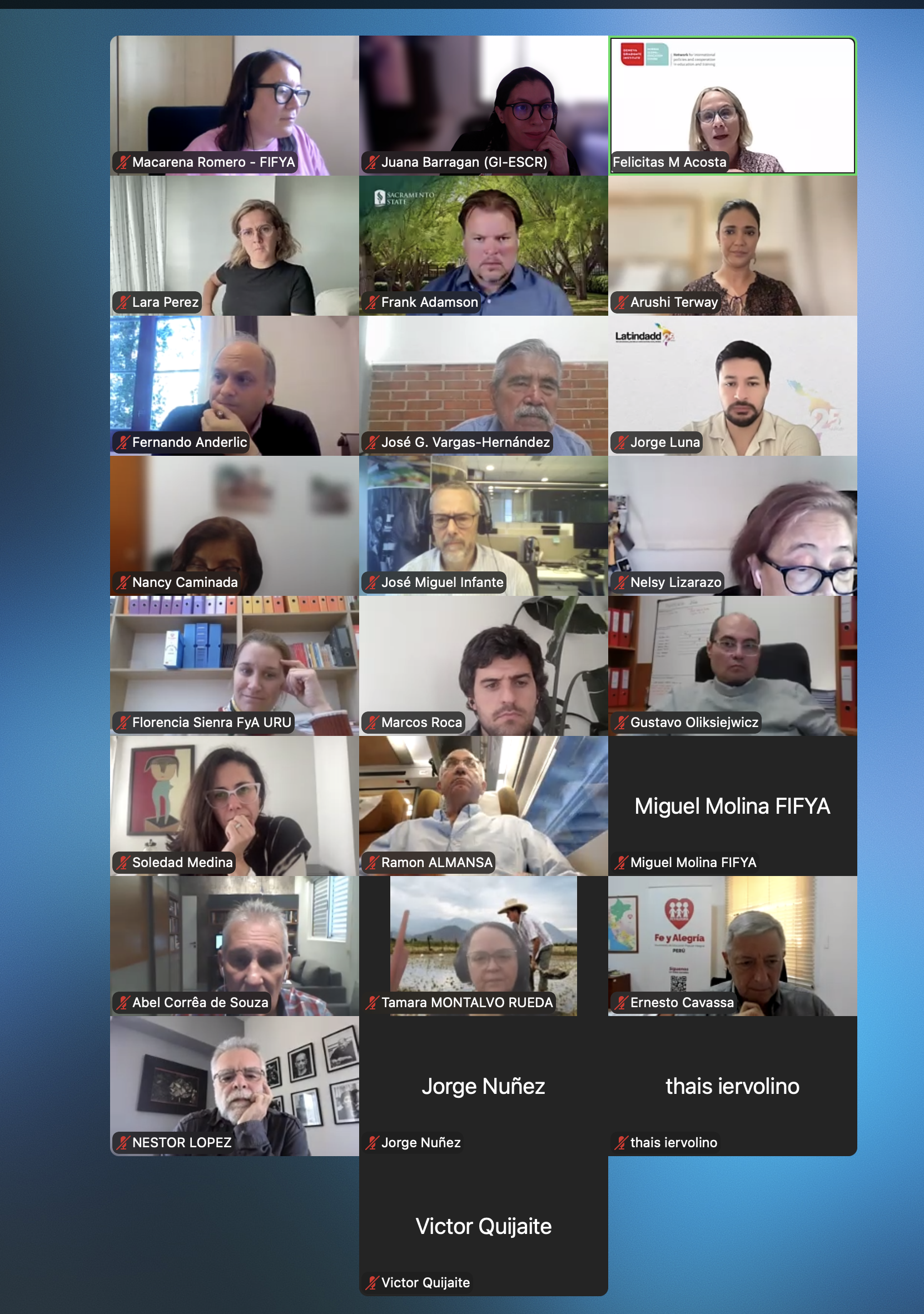
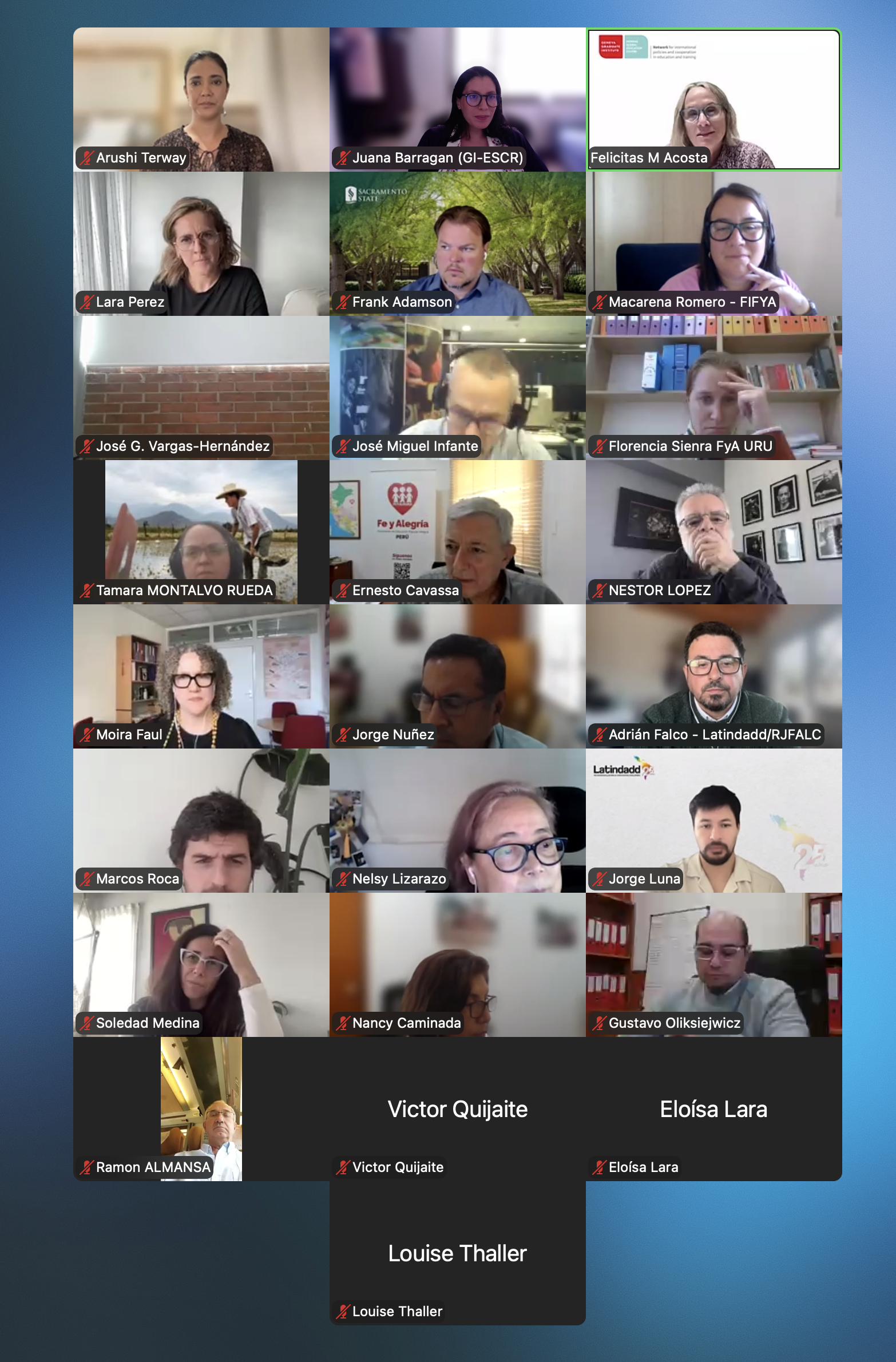
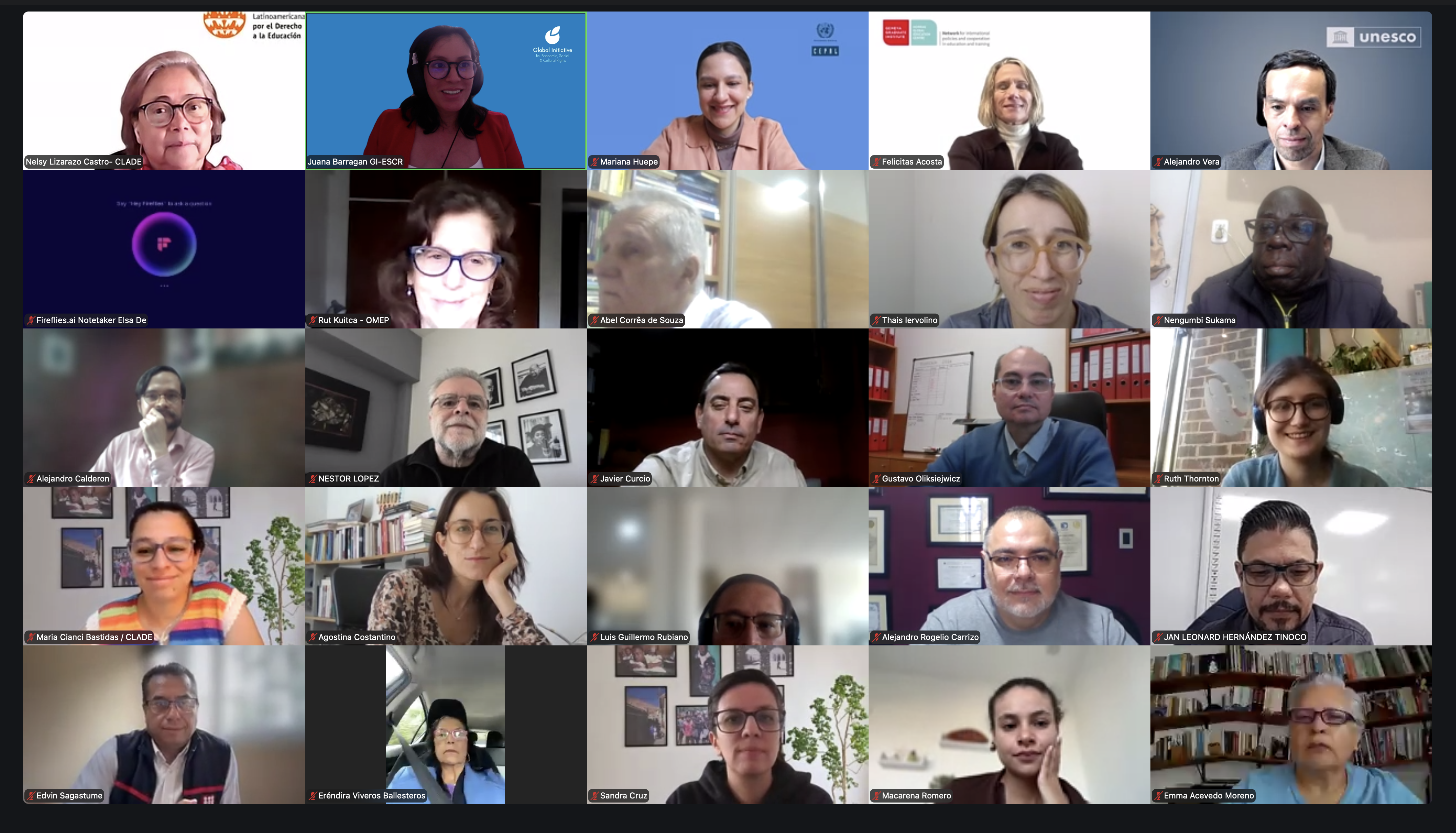
On 17 September, 1 October and 15 October 2026, GI-ESCR co-organised a three-part online webinar series on innovative financing mechanisms in education, alongside Latin American Campaign for the Right to Education (CLADE), Federación Internacional Fe y Alegría, and NORRAG - Geneva Graduate Institute. The series was designed to bring the debate of innovative education financing mechanisms closer to a broad audience, including civil society, researchers, decision-makers, sector professionals and students.
1st Webinar: What Is Innovative Finance? The Key Instruments Explained
Watch the webinar here: ENGLISH | ESPAÑOL
The first webinar had a pedagogical objective: to explain what innovative financing mechanisms in education are, how they work and what the available evidence says about their scope and limits. It aimed to lay the groundwork for the sessions to follow.
The term ‘innovative financing in education’ has gained traction in recent times. Although it is often presented as a highly technical matter, it has deep implications for the right to education. GI-ESCR, Campaña Latinoamericana por el Derecho a la Educación (CLADE), Federación Internacional de Fe y Alegría and NORRAG co-organised the series so that the mechanisms involved can be critically analysed and their technical terminology can be explained in language accessible to the public. The series also aims to examine the available evidence and open a discussion on the responsible and ethical use of these instruments, in line with education as a human right and public good.
Innovative financing models such as education bonds, blended finance as risk-sharing tools, debt swaps, multistakeholder financing models and outcomes-based financing have been heavily promoted. GI-ESCR and partners accompany civil society representatives and experts who warn about the risks these models can carry, especially when they prioritise private interests over equity and public accountability. The series also responds to broader concern about the growing role of private sector involvement in education, which is often framed as necessary.
The session was structured in three parts:
- Concepts and definitions, framing what ‘innovative financing’ designates.
- An examination of debt swaps, public-private partnerships and impact bonds in detail.
- Reflection on the scope and limits of innovative financing mechanisms, including design and transaction costs, the difficulty of measuring and attributing long-term educational results, the risk of incentives being skewed towards what is easily measurable and governance questions raised by private participation.
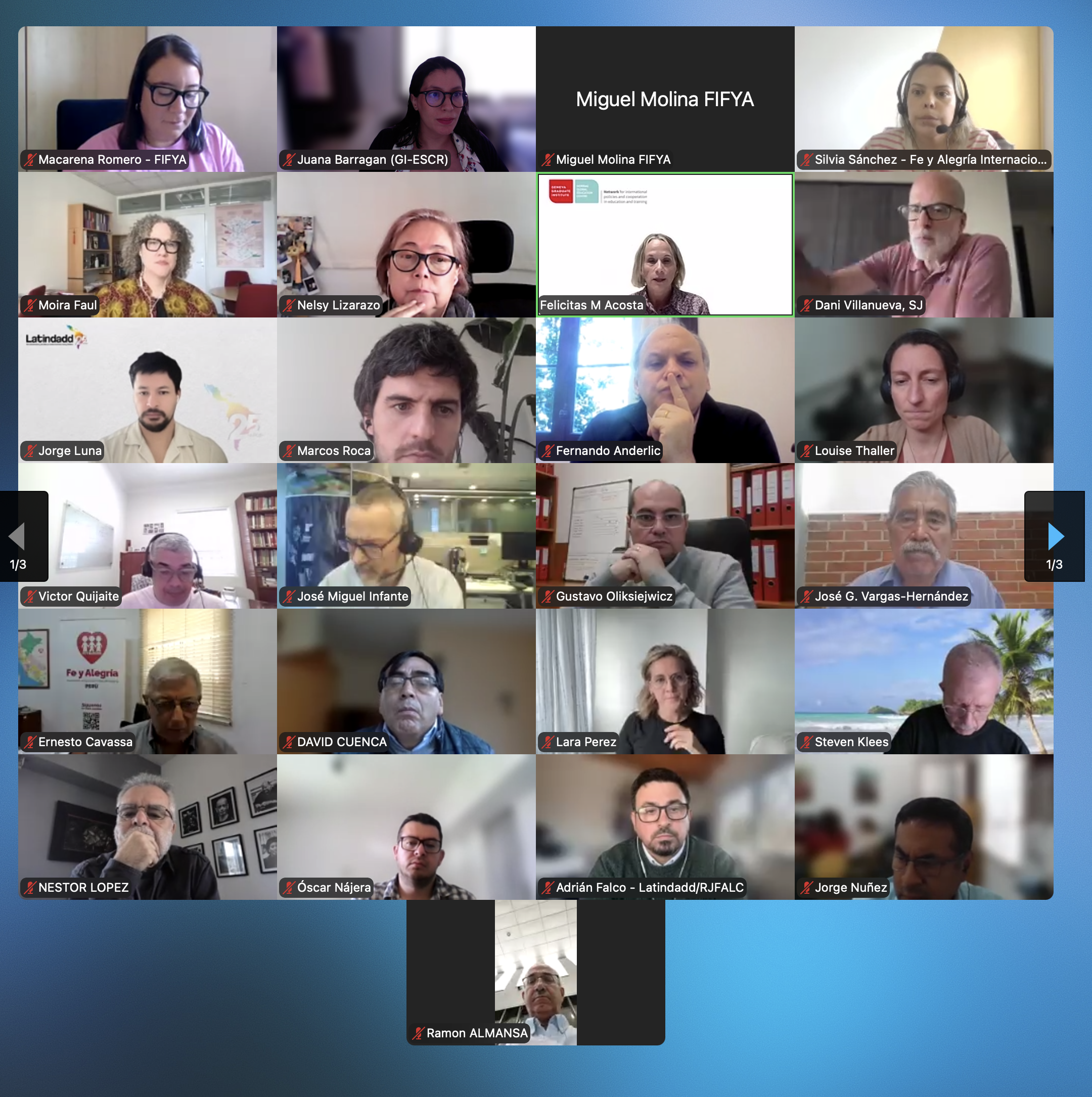
Felicitas Acosta of NORRAG moderated the session. Moira Faul, NORRAG Executive Director, addressed concepts and definitions. Jorge Luna of Latindadd spoke on debt swaps for education, Frank Adamson of California State University–Sacramento on public-private partnerships, Lara Pérez of Universitat Autònoma de Barcelona on social impact bonds and Arushi Terway of NORRAG on scope and limits. Adrián Falco of Latindadd delivered the closing remarks.
The session targeted civil society organisations, researchers and decision-makers engaging with education financing debates. It aimed to equip them with a shared technical vocabulary and analytical criteria, grounded in education as a human right and public good, so that they can scrutinise specific financing proposals as they arise in national and regional policy processes.
The session sought to build a shared analytical and critical foundation, asking which mechanism, for what objective, in what context and with what evidence. This foundation feeds directly into the series’ next two sessions.
2nd Webinar: Sustainable Education Financing: From Dialogue to Consensus
Watch the webinar here: ENGLISH | ESPAÑOL
The second webinar examined a regional experience of building agreement on education financing among institutions with different mandates and perspectives.
The webinar centred on the 2025 document 'Financial Sustainability, Equity and Efficiency of Educational Investment as Enabling Requirements for Educational Transformation in Latin America and the Caribbean'. It was developed under the mandate of an ad hoc group of eight institutions created through the 2024 Santiago Declaration: ECLAC, the World Bank, IDB, CAF, GPE, CLADE, UNESCO and UNICEF.
Opening the session, GI-ESCR’s Juana Barragán Díaz explained that the discussion had two connected aims: to explore how institutions with diverse mandates built common ground on a contested issue, and to situate innovative financing within a broader agenda for sustainable education financing.
GI-ESCR's Executive Director, Camila Barretto Maia, reflected on financing as both a technical and political question. She stressed that States’ obligation to devote the maximum of available resources to education includes how revenue is mobilised and spent. ‘For us, fiscal justice and the right to education are part of the same agenda,’ she said.
Camila highlighted that the regional text begins with fiscal space, tax progressivity and quality per-student spending, treating innovative mechanisms as tools that require careful assessment. She also acknowledged the questions raised by consensus-building processes, including whose perspectives may be absent, describing GI-ESCR’s approach as one of ‘critical participation: being present in the conversations, defending non-negotiable lines clearly, and building bridges where possible’.
Alejandro Vera Mohorade of UNESCO traced the document’s origins to the 2024 ministerial meeting in Santiago, held under the Education 2030/SDG4 coordination framework. Education authorities recognised financing as an enabling condition for educational recovery and transformation, creating a political opportunity for the technical work already under way.
Mariana Huepe of ECLAC described the diversity of participating institutions as both a major strength and a challenge. She identified a shared diagnosis that enabled the process to move forward: ‘What united us, despite our diverse viewpoints, was the importance of education’, for which financing was an enabling condition.
Participants also discussed the drafting process, which involved reviewing the key education position documents of each institution, identifying shared principles and recommendations, and refining drafts through joint meetings, written comments and bilateral conversations on sensitive issues.
One of the main areas of disagreement concerned private and debt-based instruments. Some participants viewed them as a possible route to expand resources, while others highlighted risks of indebtedness and weakened State responsibility. The discussion established two central principles: education is a right and the State is its primary guarantor, while mechanisms involving private finance must be regulated and must never substitute sufficient public financing.
This framing reflected a central objective of the series: enabling participants to assess financing proposals in light of their purpose, context and available evidence. It also supported a critical examination of whether particular mechanisms contribute to financing the right to education.
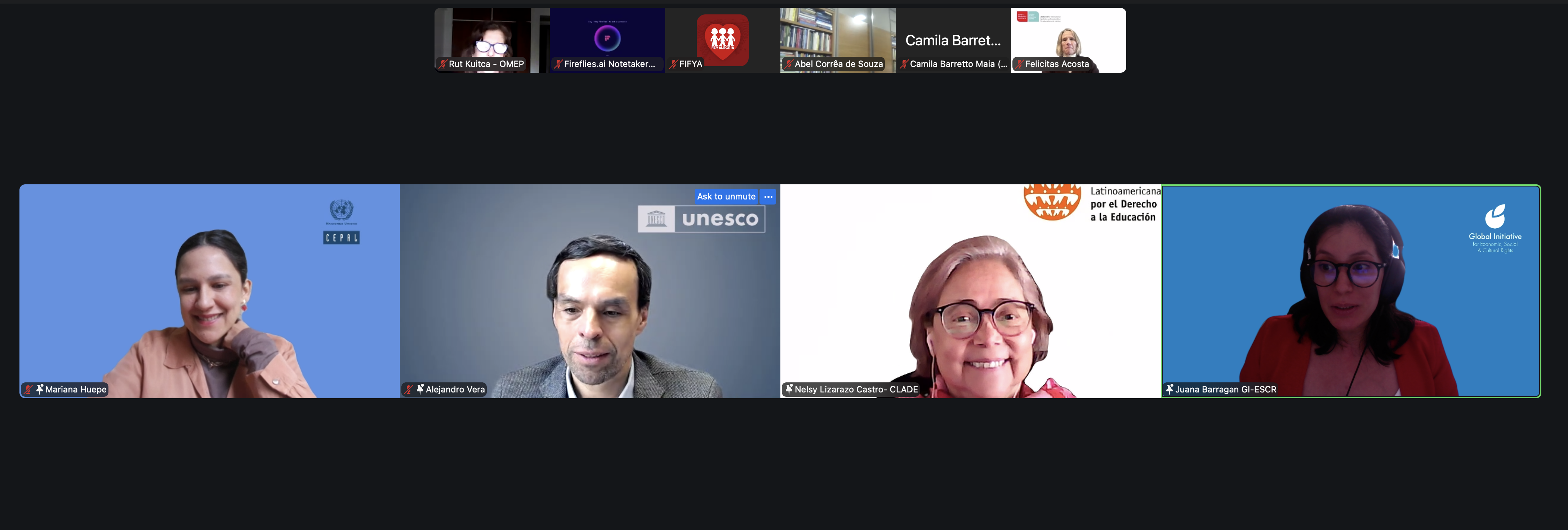
This session brought together contributions from Nelsy Lizarazo Castro of CLADE, Mariana Huepe of ECLAC and Alejandro Vera Mohorade of UNESCO, alongside GI-ESCR’s contributions to the framing of the discussion.
3rd Webinar: What Are the Critical Questions on Innovative Finance in Education?
Watch the webinar here.
Innovative financing mechanisms are increasingly promoted as a way to close the funding gap in education, yet the evidence behind them remains thin. That was a conclusion shared by the speakers at ‘What are the Critical Questions on Innovative Finance in Education?’, the online webinar held on 15 October 2026 to close our series.
The panellists reviewed the research on these instruments from a human rights perspective and examined their relevance for Latin America and the Caribbean. They warned that part of the field runs on belief rather than evidence. They also put forward a public alternative from Brazil: the Custo Aluno-Qualidade (CAQ), a standard built by civil society that sets the minimum cost per student needed for quality education.
More Than a Technical Question
Education bonds, blended finance used as a risk-sharing tool, debt swaps, ‘multistakeholder financing models’ and outcomes-based financing have all been heavily promoted in recent years. Although the debate around them is presented as highly technical, it is deeply political and has profound implications for the right to education. Empirical research in the field is still at an early stage, with limited data on the supposed advantages of these mechanisms.
Civil society representatives and experts warn of the risks these instruments carry, especially when they prioritise private interests over equity and public accountability. Their warnings are linked to a broader concern about the growing involvement of the private sector in education, which is often framed as necessary. GI-ESCR stands alongside them and calls instead for a renewed focus on public investment, progressive taxation and structural change in the international financing architecture to ensure sustainable public education systems.
The final session set out to bring an agenda of critical questions from the region to bear on mechanisms being designed at the global level, with particular attention to sovereign debt and fiscal justice. It sought to equip civil society organisations, researchers and decision-makers engaged in education financing debates with a shared technical vocabulary and analytical criteria grounded in that principle, so that they can scrutinise specific proposals as they arise in national and regional policy processes. Its intended contribution was to identify concrete pathways for researchers, civil society and education ministries in Latin America and the Caribbean to strengthen the sustainable financing of the right to education.
Thin Evidence and Unanswered Questions
Marina Avelar, Assistant Professor at the Universidade Federal de Minas Gerais in Brazil, opened the presentations by explaining why the debate is so hard to assess: the lack of evidence is itself a central finding. She traced the discussion to a funding gap for international education goals in the early 2000s. Early instruments such as debt swaps, she noted, followed a different logic from today’s impact and outcomes-based instruments, which attract development banks, foundations and investors, leave room for profit and rest on a narrative of the private sector as necessary.
Her review found that the central theory of change, that private actors can help solve the financing puzzle, has not been verified, so part of the field runs on belief. There is almost no evidence on whether the money is new or existing funding stretched further, how costly the mechanisms are or how much reaches schools after fees, consultants and investor returns. Evidence on educational results such as access, availability, acceptability and adaptability is also limited.
Risk and return, she stressed, mean different things to investors and educators. Investors seek a financial return and bear financial risk, whereas in education the return is the educational result itself and the greater risk is social, from a service that fails or is interrupted to students in control groups who go without services. That social risk is often absent from the evidence.
Education financing, Avelar argued, is a structural question, since the type of money entering the sector can change what education is and what it is for. Data from two recent NORRAG publications on around 120 education impact bonds illustrated the point. Financial data are available for 107 of these projects, showing USD 184 million in upfront capital and USD 444 million committed as returns, with the average return reported at 2.5 times the initial funding: sums far from the size of the funding gap, yet attractive to investors.
More than 90 per cent of the funding went to the Global North, with the United States and the United Kingdom together accounting for about 60 per cent. Of the bonds, 71 per cent used learning outcomes as metrics and 86 per cent relied on binary targets, reached or not reached, which raises the risk of perverse incentives and gaming. Only 34 of the 120 bonds have complete public data.
She linked these findings to the known risks of high-stakes accountability, from cherry-picking students and places to teaching to the test and falsifying data, and to decades of research on school autonomy with accountability and governance by numbers, which documents gaming, curriculum narrowing and pressure on teachers. In Latin America, she recalled, the experience of World Bank impositions and austerity in the 1990s warns against northern solutions that reshape local agendas, while the right to education is under pressure from new private actors and from conservative and far-right trends.
Her conclusion was that the debate must move beyond measuring outcomes and money to ask whether these mechanisms can support the education the region wants, at a time of democratic crisis. More evidence on equality, inclusion, finance, ethics and governance is welcome, she said, as long as it is oriented towards social justice and national resource mobilisation.
A Public Alternative Built by Civil Society
Andressa Pellanda, General Coordinator of the Campanha Nacional pelo Direito à Educação, presented a different kind of innovative financing. Public and transparent rather than built on private capital or future revenue, it starts from a single question: what public investment per student is required to guarantee quality education?
Private mechanisms, she noted, are promoted with enthusiasm but lack evidence on access and on the progressive realisation of the right to education, and they can carry conditions that treat education as a commodity. With high inequality and underfunded, fragmented systems, she argued, the region cannot afford to experiment with students and teachers. In her view, any mechanism should face three tests:
- Does it strengthen the State’s duty to provide free, quality public education?
- Does it improve transparency and accountability?
- Does it address structural underfunding or only patch it?
That question of need lies at the heart of the CAQ, which civil society has been developing since 2002. It sets the minimum cost per student for each stage and modality of basic education, calculated from the inputs that quality requires: class size, initial and continuing teacher training, salaries and careers, school infrastructure, laboratories, libraries, books, sports courts and teaching materials. In this way it inverts the usual question, asking what is needed rather than what is available.
Since Constitutional Amendment 108 of 2020, the CAQ has been the basis of FUNDEB, Brazil’s main fund for basic education, which became permanent. Pellanda described this as a major win: the first mechanism built entirely by civil society to be enshrined in the Constitution.
She highlighted four qualities:
- Its transparency and accountability give planners, prosecutors, oversight bodies and citizens a measurable standard against which to judge public spending, turning the right to education into an auditable demand.
- It is public in character, strengthening State capacity without creating dependence on external actors.
- It is adaptable, a living tool updated as needs and evidence change.
- And it enjoys social legitimacy, having been built by a broad alliance of teacher unions, student movements, researchers, prosecutors and civil society organisations.
In Brazil, a simulator compares each school’s actual spending with the CAQ, made possible by a large national education database of a kind that many Global South countries lack.
Pellanda set out five pathways for using the evidence generated through the CAQ:
- Build and strengthen the evidence base, with comparative studies of rights-based financing models and market-based mechanisms.
- Translate evidence into accessible language and formats, since the technical language of innovative financing excludes schools and communities.
- Engage in policy spaces, from municipal councils to international conferences.
- Build alliances.
- Be persistent, because structural change requires long campaigning and negotiation rather than quick fixes.
She also called for stronger national monitoring systems and data, as well as more space in the global conversation for proposals from the Global South. The most truly innovative financing, she argued, is public, transparent and rooted in calculating what the right to education requires. It means turning a constitutional promise into an accountable budget line, year after year.
From the Instrument to the Purpose
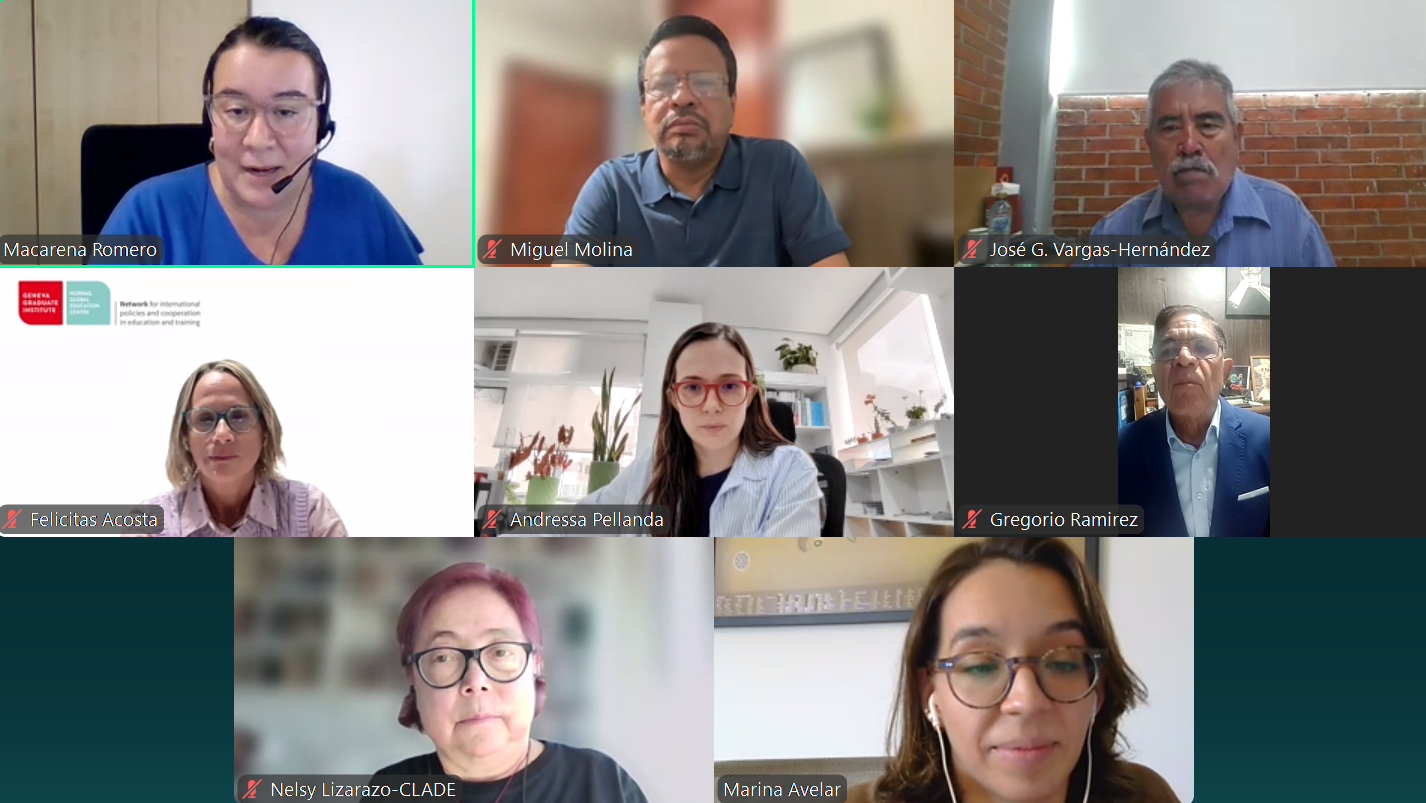
In the discussion that followed, moderator Macarena Romero Álvaro, Technical Manager for Public Affairs at the Federación Internacional Fe y Alegría, stressed that collective work across sectors can help drive the move from theory to public policy. Responding to a question on public funds for subsidised private schools, Pellanda explained that in Brazil pre-primary education is largely provided by private schools financed with public money because public pre-primary schools were not built in time. With a revision of FUNDEB expected soon, she said, civil society will again try to limit public funds going to private schools, a demand it did not win when the fund became permanent.
Asked about a Mexican bond, Avelar commented on the type of instrument: an earmarked or labelled bond, through which a government issues debt as it normally would but labels the proceeds for education. She saw this as innovation within the public sector using existing instruments, suited to one-off investments such as building schools, while recurring costs such as teacher salaries belong in the annual budget. Market-based mechanisms, by contrast, fragment money flows, add debt and create commitments to private institutions without the sustainability that public systems need.
Felicitas Acosta, Regional Coordinator for Spanish-speaking Latin American countries at NORRAG, highlighted a paradox: although the narrative around innovative financing demands evidence and results, there is no evidence of outcomes yet, so it ends up resting on belief. She distinguished financial risk, managed through the attractive returns of impact funds while the State rather than the investor ends up indebted, from social risk, which includes the perverse incentives already known from policy evidence. The field, she noted, does not lack evidence on how incentive mechanisms tend to simplify the aims and tasks of teachers.
Acosta also connected governance by numbers to its colonial dimensions and highlighted the CAQ as a long-standing, transparent, public and contextualised tool that shifts attention from what is available to what is needed, measured in objective terms such as infrastructure and working conditions for each student and educational level. Mechanisms, she said, need local ownership, grounding in texts such as national constitutions and the understanding of all stakeholders, including families and students. Given declining financing and persistent inequality in the region, she warned, risking resources and time on mechanisms without clear answers is dangerous.
The Work Ahead
With the series concluded, the challenge is, on the one hand, to keep deepening the technical work and the development of evidence and, on the other, to strengthen the alliances among organisers and participants in order to build a collective strategy that brings innovative financing in education into the spotlight.
Built jointly by GI-ESCR, CLADE, Fe y Alegría and NORRAG, the series sought to equip civil society, researchers and decision-makers within and beyond Latin America and the Caribbean with the tools to assess innovative financing mechanisms against the standard of education as a human right and a public good.
Related Articles
SITEMAP
TAKE ACTION
NEWSLETTER
